Electric Girl
Introducing a world before its release.
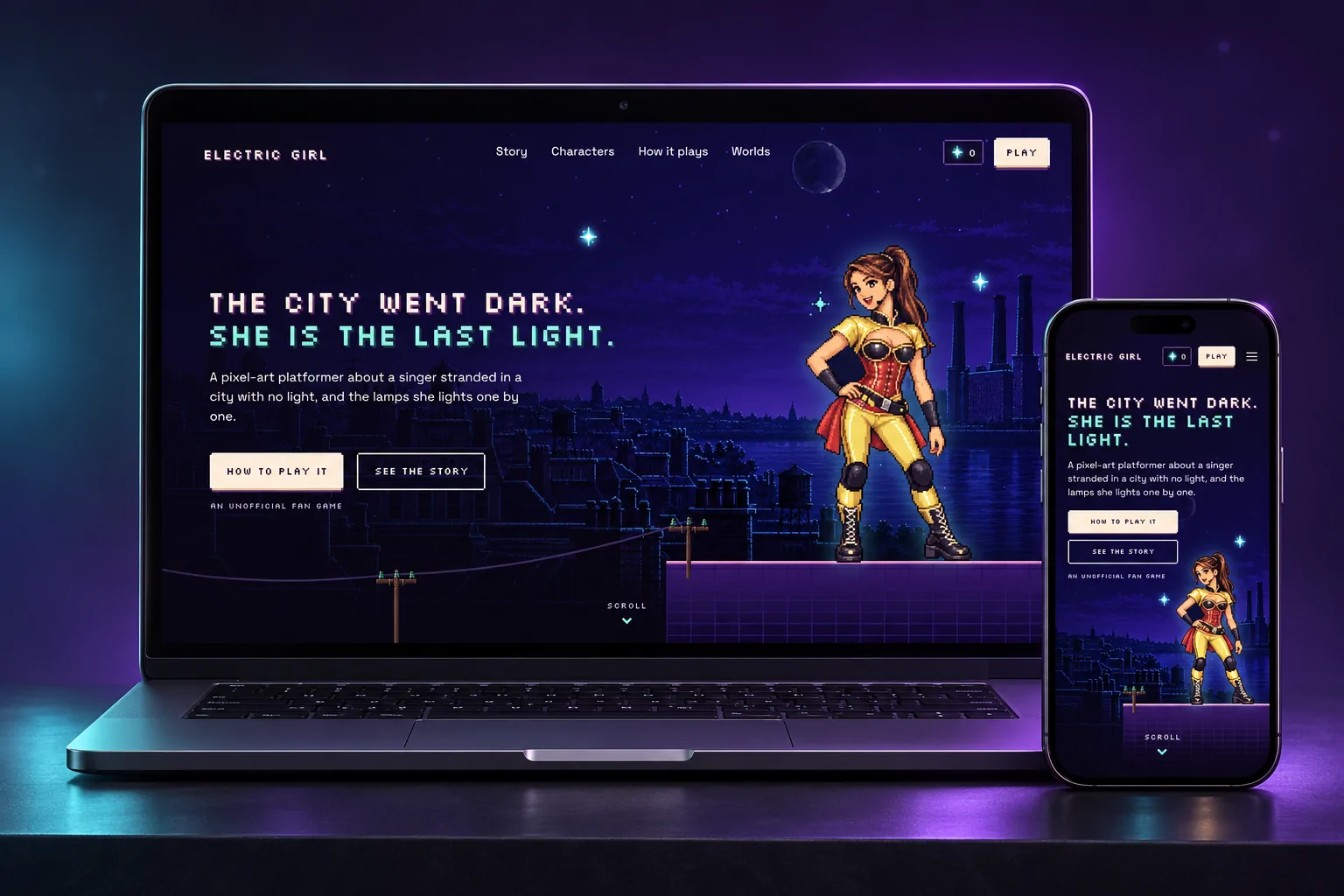
Make the world worth exploring
A pixel-art platformer nobody has played yet, with no studio behind it and no audience waiting. The page had to introduce an unfamiliar game: who the character is, what happened to the city, and what the player will actually do there. It also had to be straight about where the game stands, because it is not released. The game is Matan Cyrus's. This studio came in to help improve it, and designed and built the landing page and the campaign around it. An unofficial fan project, inspired by Electric Girl as portrayed by Dana Frider in Festigal 2007, and not affiliated with or endorsed by Festigal or its performers.
The site became part of the game.
Electric Girl is a game, and its site became just like it: playful, colourful and always moving.
The aim was to open the game up to people and make the site part of it, so the first scroll already feels like playing.
- Fun
- Motion
- Part of the game
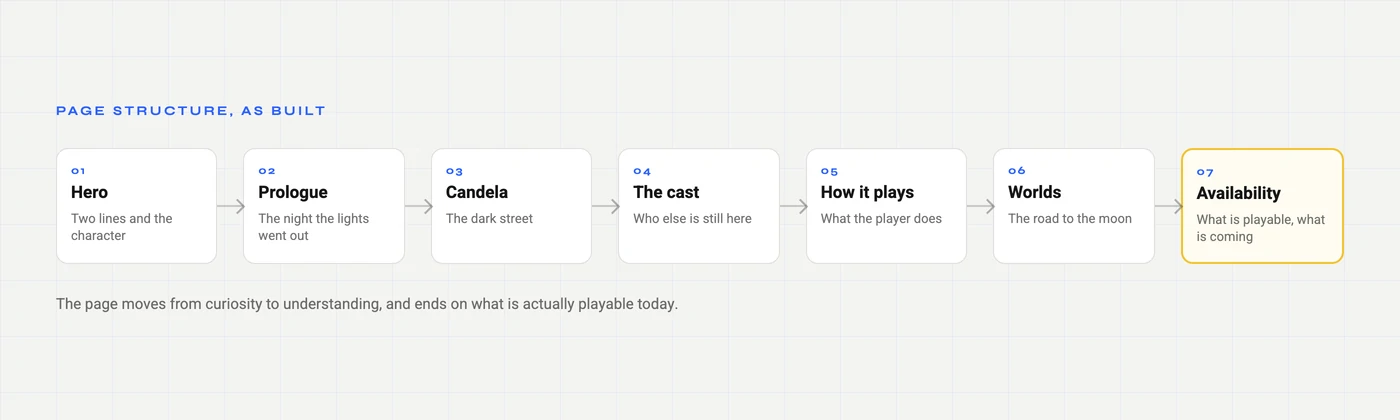
The order the page is built in
Seven sections, each earning the next. The premise arrives before any mechanic, the people arrive before the systems, and availability is last rather than hidden. Nothing on the page asks a visitor to care about a feature before they care about the city.
The page structure as it is built today, drawn from the live sections rather than from an early sketch.
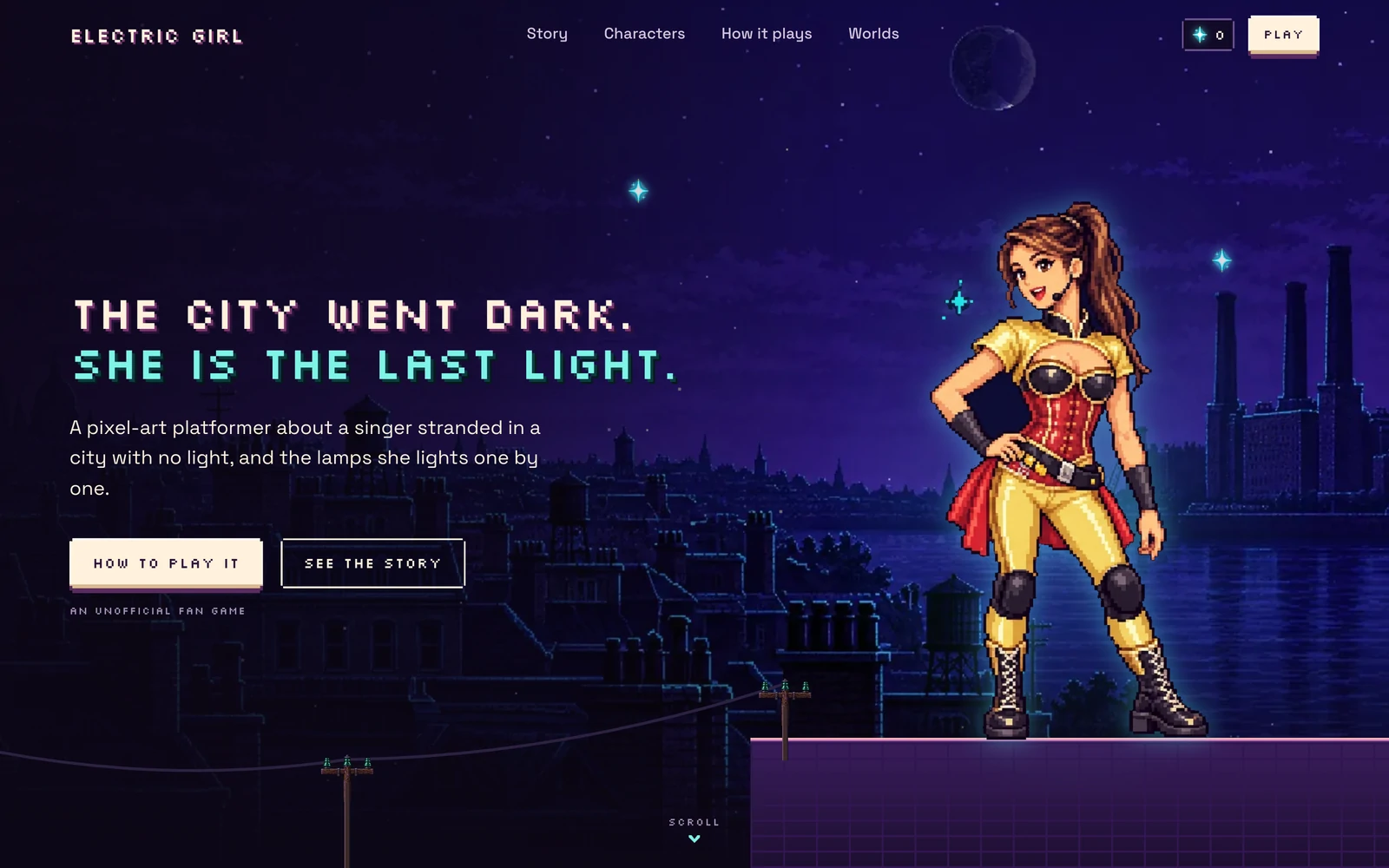
The first screen carries the premise
The city went dark. She is the last light. Two lines hold the whole conflict, the character stands in her own glow against a dark skyline, and the two buttons offer the only choices worth making there: see the story, or find out how it plays. The line under them says it is an unofficial fan game before anyone has scrolled.
The live first screen. Every button on this page is an anchor into the page itself, because there is nothing to download yet.
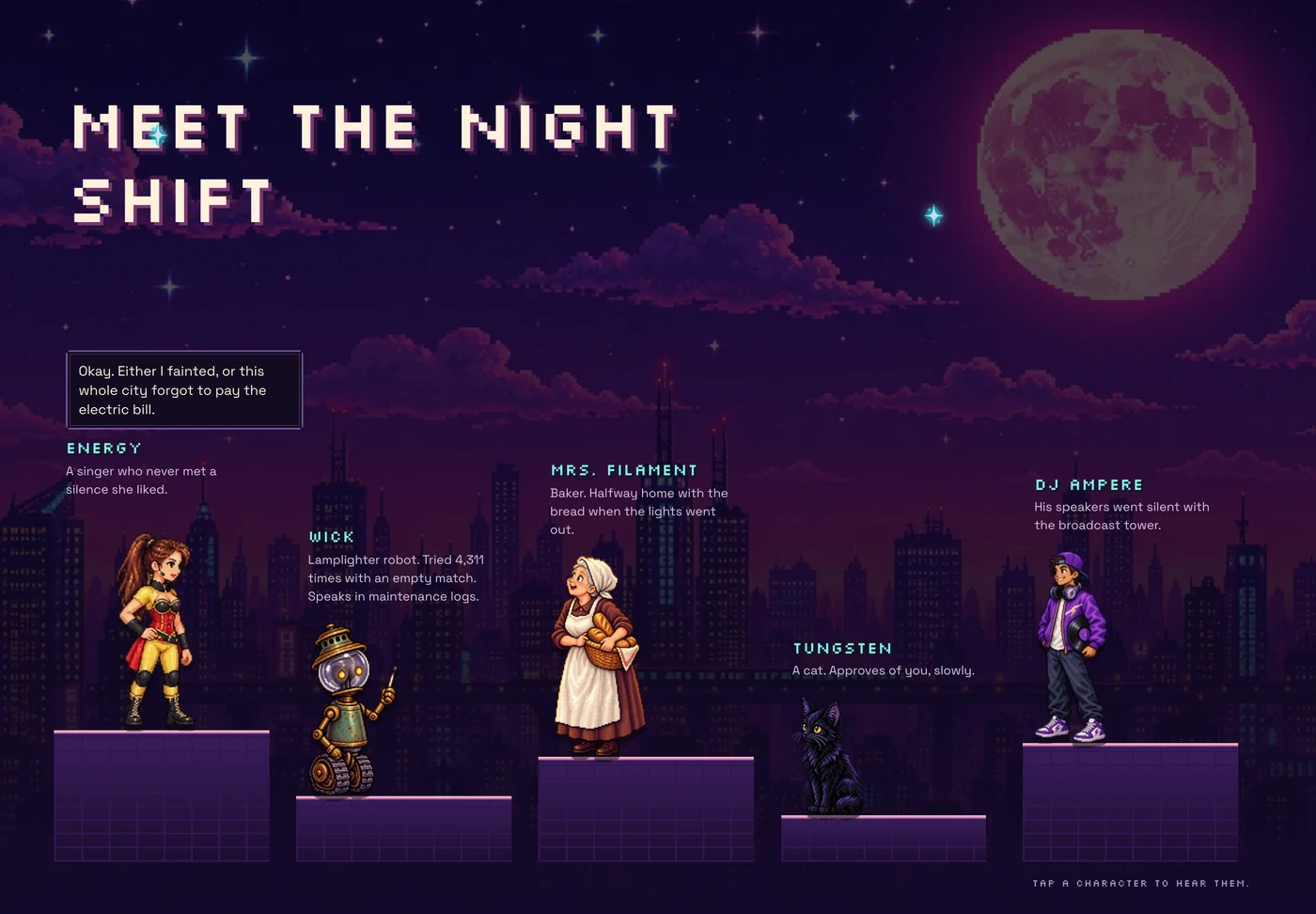
Give the city someone to care about
Five residents, one line each, and a second line that only arrives if you tap them. A lamplighter robot that tried 4,311 times with an empty match. A baker caught halfway home. A cat that approves of you slowly. The writing is the cheapest way to make a city feel inhabited, and the tap is what turns a row of portraits into a place.
The real interaction: tapping Energy answers back. The cast and their lines were written as part of the work on the game.
Show what the player actually does
Three verbs carry the whole game: gather sparks, run a current along a wire, get past the static. Each one is a short clip recorded off the game's own canvas while a script plays the level, so what a visitor watches is the build, not an impression of it.
Recorded off the game canvas in a headless browser while a script plays the level. Muted, and it holds its first frame where the visitor has asked for less motion.
A campaign written three times over
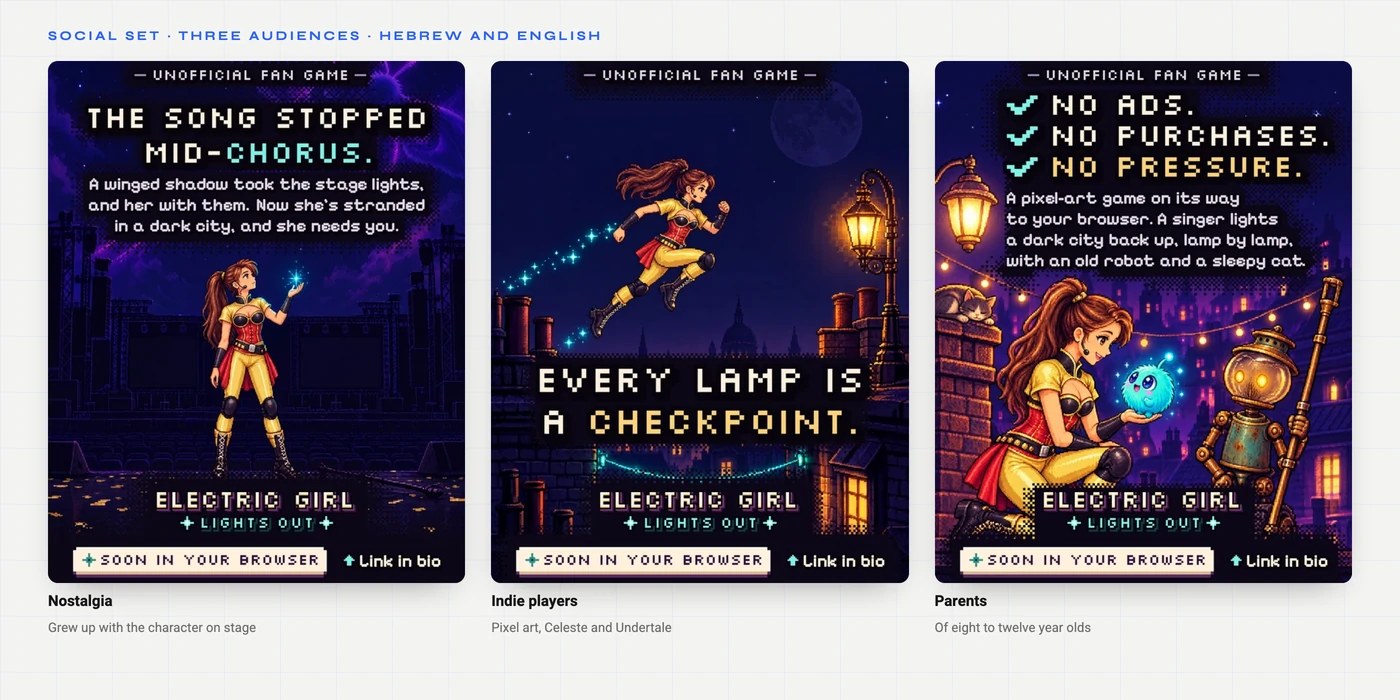
The same game reaches three different people for three different reasons, so each one got its own art and its own sentence rather than one post recoloured. Someone who grew up with the character is told she needs them now. A player who follows pixel-art platformers is told what the mechanics are. A parent is told what the game will not do to their child. Each exists as a feed post and a seven second story, in Hebrew and in English.
Twelve finished posts: three audiences, feed and story, Hebrew and English. Each carries the unofficial label and a coming soon line, because the game is not out. None has been published yet.
The trailer, cut but not finished
Twenty storyboard frames became twenty animated clips, assembled into a 58 second picture edit and a 30 second teaser. Both are silent: the music and the on-screen lines are still to come, and two frames stand in for gameplay and are marked for replacement with real capture. It is an edit in progress, and it is listed here as one.
Real capture of the wire mechanic. The storyboard frames the trailer is cut from are not published, so this page shows the build instead of the edit.
A clear introduction to the game
The page brings the premise, the cast, the mechanics and the road to the moon into one continuous introduction, and ends on the truth: a prologue and five levels play, one flight stage is an early version, the rest is on the way. Nothing says play now, because there is nothing to play yet.
The page as it stands. The level tags on it match the game's own code: playable, early version, coming later.
What shipped.
Published: the landing page. The game itself runs from source and is not released: a prologue and five story levels play, one flight stage is an early version, and three levels are still to come. Finished, not published: twelve campaign posts for three audiences, in Hebrew and English, with their captions written and a bitmap Hebrew face drawn for them. In development: the trailer, whose twenty clips are cut into a silent 58 second edit and a 30 second teaser, waiting on music, on-screen lines and two shots of real gameplay. The game is unreleased and has no public build.
- Landing page, live
- Campaign set in two languages
- Story bible
- Contributions to levels and writing
 Next projectKedros Estates Open the project